Sunday, 13 February 2022

Ice and sleet


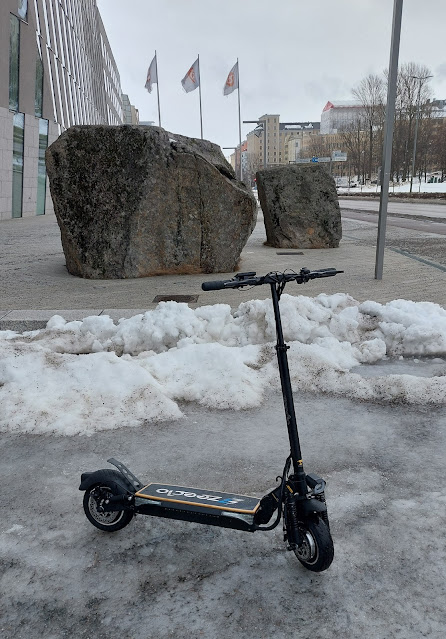
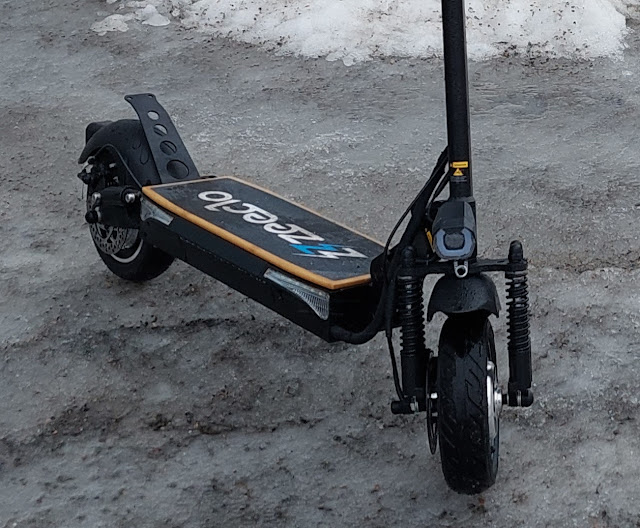
There was a short window of time with dry roads, before new snow. So I took the opportunity and rode the Fenix outside.

Wind and wetness worried me more than the temperature (+2°C) and the occasional crunchy patch of icy snow.


With the lobster-like skiing(?) gloves I didn't feel any cold in my fingers. I've driven in a -6 weather with these, and the cold does eventually get through after 15-20 minutes. 

I felt the ice and packed-snow areas are driveable, but they also have thickness and hitting the snow sheets in a wrong angle could result in a wobble.


Thursday, 3 February 2022

Ball: The System


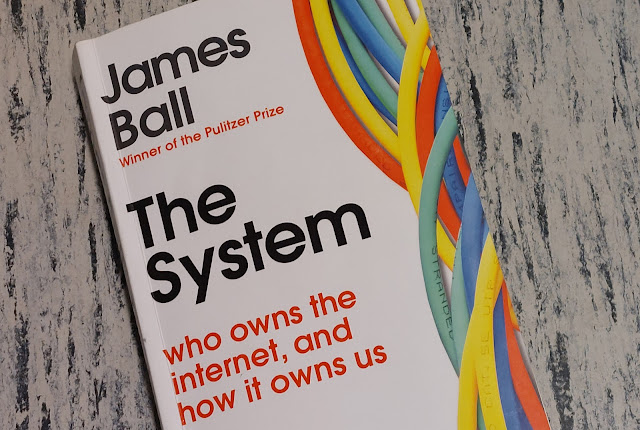
I read the 2020 book The System. Who owns the internet, and how it owns us from James Ball.

Instead of explaining the technical workings of the internet deeply, or dwelling too much on the invention of computer networks, Ball instead presents a loosely chronological cross-section of the forces that, in different times, molded the internet as we know it.

The focus is in the who owns the internet, and how it owns us part, identifying challenges in various areas regarding loss of privacy, concentration of wealth, aggressive advertising, eradication of journalistic quality, threats to net neutrality...

I'm making shortcuts by not addressing the origins of these varying opinions, and for most part simply go with "Ball says", the author being responsible for the book as the curator and presenter of these viewpoints.

The story so far

Ball figures the early era (about 30 years) was when most of the decisive technologies and protocols were set, but were in no way envisioned for a multi-billion user, global internet. The stage is set for an environment that is used by large masses of people, having implications for ethics and security both in national and global scale.

With the invention of the World Wide Web the commercialization of internet began in earnest, leading towards the original dotcom boom and crash. Venture capitalist funding has served as the driving force of the internet for the past 20 years. Seeking to make ever larger profits through new companies, the bigger companies then foster a new generation of influential startups. The new smaller companies will be hungry to demonstrate their viability for the next round of funding.

Pretty much the only thing that can be monetized is a large user base and increasing it, this is what they will try to gather, at first providing benefits "for free" to the users. This has had also social and political consequences that took the company founders by surprise. Whereas there are good grounds for claiming the internet network itself is a neutral utility, sometimes the providers of the "platform internet", such as Facebook, have argued similarly when their service has helped sway public opinion for the worse.

The internet never was the same as WWW, but arguably it's the surface layer of things that make it a force for people. But even the "WWW era" may eventually be a thing in the past, as smartphone app ecosystems have proven. Regulatory approaches lag behind, and may not even always touch what is happening in the ever-changing app world. Movements are born in channels like Facebook, Youtube, Twitter, Twitch and so on. The mobile phones are loaded with apps and services that utilize the internet connection in different ways. In some countries, the ISPs don't sell so much "internet" but "facebook".

The book sheds light into the complex way ads developed over the internet, from modest contextual banner-ads to the programmatic, then the targeted/auctioned ads of today that have helped generate an ecosystem of fake content and clickbait headlines. Some sites have begun to live an independent life from any "quality" website. Ball accuses publishers having almost willingly given away their position as a provider of lucrative ad space, whereas initiatives like the GPDR only succeed to miss the original point (of curbing the rampant ad-cookie exploitation).

Ball questions the truism that ads are needed for any free content, as internet did nicely before targeted ads. He suspects that middlemen benefit far more than the deserve, but also suggests that things wouldn't need to be as bad as it is. Ads can actually serve a purpose, but something about the system needs to be better tuned to avoid the worse excesses.

The recurring triad of evil here is Silicon Valley-style Big Tech (make things fast and fix them later), Free-market economic theory derived from Reagan/Thatcher era (what makes wealth is also morally validated) glued together with Venture Capitalism. (fund a promise of future profit despite current viability)

A new global war

The story shifts to cyber attacks, security, surveillance and the Snowden revelations on NSA, a story which Ball had a direct involvement with. Just to recap, NSA experimented with a system that would store "everything" in UK communications for three days, and the metadata for 30 days, something that was technically kind of legal there. Furthermore, NSA had actively sought deals with companies and online service providers to build backdoors in them. From some kind of niche occurrence, hacking has turned into a constant cyber war being waged between governments.

All this wasn't achieved by intelligence agencies alone, nor was it devised by governments as some kind of intentional conspiracy. Ball argues that the aforementioned advertisement capitalism led to a situation where massive pools of user data were suddenly available on the internet, given away willingly (or at least without worry) and eventually worth experimenting with.

Platforms such as Facebook are here seen as an extension of US "soft power" abroad, hence the US might not have been that eager to regulate tech companies and their platforms in the first place. The apparently altruistic push to bring internet to less developed countries can be seen as building US beach-heads for favoring their established companies. So, it's not simply a language barrier and a dictatorial regime that makes countries like China and Russia build their own version of the platform-internet.

It's also an issue who will host the new version of the internet's surface layer in the future and what it will be like. The danger of 5G is not some skull-eating radiation, but that with the new standards there's an opportunity to smuggle in ideas about network "slicing" that again may undermine net neutrality, become a new kind of surveillance tool, or another "soft power" extension of some nation, this time perhaps China. When Huawei was stopped, it was largely on suspicions for the kinds of things US had already previously practiced when holding the strings of the internet.

A couple of times the book draws parallels between internet and the original railroad expansion, acknowledging the main difference that railways tended to centralize and internet is inherently dispersed. But what is being centralized is the wealth in the hands of those who were already well-to-do before internet existed, much like what happened with the railroad.

Whereas industry giants could benefit and leverage the railroad network to gain advantages in other fields, the 20th century anti-trust activities largely put this to an end. Mergers are still scrutinized, yet when something similar happens on the internet, it's not an issue, as Ball repeatedly points out. The Facebook acquisition of WhatsApp is especially lambasted here, but companies like Google(Alphabet) and Amazon likewise made strings of acquisitions without being questioned.


Uh, huh

So, all in all a very light read, but not altogether "light" in the themes it presents. The angle is journalistic rather than academic, giving it more dramatic tension throughout, perhaps even an agenda. The quotes from the interviewed people speak a story, and the reader can make their mind about them.

Still, the discussions and opinions are from noted authorities (including academics) so their voice does have weight. There is a value of having a book like this on your lap while things are still happening, rather than having the academic account ten years later.

I'm not sure what to make of all the pessimism. On one hand the book is attempting to shake people out of the kind of "Yeah it's bad but what are you gonna do" mentality, on the other hand it does paint a picture of a very major complex that can barely be touched by individuals.

The suggested remedies in the book are intentionally somewhat anti-climactic. The whole message of the book is that the internet has a number of different problems in it, and therefore there is no one major fix. Advances can and should be made in multiple smaller areas. At best it is possible to encourage a "systemic" view into the complexity that is the internet and to remind it's the people that set it up and formed it in the first place, not some force forever outside our reach.

Sunday, 23 January 2022

C64 wi-fi modem

I received this wi-fi modem for the Commodore 64 already a few years ago. The board has no identification on it, but it looks like a bare-bones version of the same design that has been going around, like WiFi-64 and Strikelink.

Although there are various C64-cartridges that read SD cards, there are not that many direct file transfer solutions between PC<->C64. So I'm mostly looking at the modem from this angle. The modem sticks into the user port so it doesn't take the cartridge space.

The first time round I had some success with contacting a BBS, but the ftp, wget and other internet functions failed to work for me.

This was all because of not knowing one command! Re-reading the manuals, I found out I can upgrade the firmware directly with the terminal, connected to the internet (as it could do that much). After moving from version 2.62 to 3.6.4 I got the wget file transfer working.

From here you can download the disk image with C64NET WiFi apps by Bo Zimmerman. These are BASIC programs for various tasks. The site also has more comprehensive manuals. 

A better terminal, such as the CCGMS, is useful for contacting Bulletin Board Systems, but that's not my focus here. The minimal CBMTERM included in the apps disk is enough for adjusting the modem parameters.

From the same disk, CONFIGURE is for the first-time setup of the modem. It didn't do anything meaningful now that it seems I've run it before. Sadly I didn't make notes then. After the basic configuration has been done, the CBMTERM can be used for changing the network and the network password.


Terminal

CBMTERM is a simple terminal mostly useful for sending those AT commands to the modem.

Here are some of the commands to try:

ATE1 for command echo might be needed if you don't see the characters you are typing.

ATW lists available and compatible wi-fi networks, together with signal strength.

ATW "[SSID],[PASSWORD]" will connect to a wi-fi network.

Note that this will respond with "ok" if it was succesful, and with "error" if the SSID is wrong or the password is wrong. 

The CBMTERM runs in lowercase, but everything you type in lowercase is actually uppercase in the outside world. So if your wi-fi network name is XYZ5235, you'll type xyz5235. Same with the password. 

My network name had a _ character, this shows as a left arrow on C64, and can be typed in as such.

ATI gives information on firmware and the wi-fi network.

AT&U shows if you can download a newer firmware.

AT&U6502 then actually downloads and installs the firmware. Despite instructions I didn't need to physically reset the modem. Of course if the service ceases to exist, the firmware update can't be done.


Moving files

Again from C64NET WiFi apps disk, the WGET can be used for downloading a file from a web address. The output filename and type has to be defined here too. The default suggests a sequential file, but if you download a prg the line has to read something like @0:myprog,p 

I first tested the wget with the default example, downloading index.html from Bo Zimmer's page. Then I moved to downloading a C64 program file available elsewhere on the internet.

Of course, downloading a file from a web server on your local network is ok, using the IP address. So if the server is set up then for me http://192.168.###.###/index.html could be downloaded.

The bytes will mosey down the tubes to your Commodore 64 drive. Even if the interface was improved (and why not, it's in BASIC), the downloading won't be especially fast.

After setting up an ftp server on a Linux over the local network, I could also try the FTP program supplied for moving files between my Linux and the C-64. The program asks for the ftp address (in this case an IP address), the username and the user password. Then it's ftp commands all the way.

The ftp is already more handy for transfering multiple files, but I have to say that handling the switch between passive/binary mode and such, also takes time.

Some observations

A wi-fi modem that runs on 1200 or 9600 baud max, isn't going to be the final solution for immediate transfer between PC and C64. But I can see it could reduce the need for swapping that microSD card.

Now I simply tested the features and downloaded everything on the mounted C64NET apps disk image. Later, I'll have to think about how and what I am going to mount on the SD card reader and when.

As the programs are in BASIC (with shared M/L libraries), some ease of use could be achieved by rewriting the programs to apply to my local situation. For example I could modify the program to default to my local ftp server address, or just making the connection directly.

I mostly used the modem in conjunction with the SD2IEC+Epyx Fastload combo catridge, with the fastload on. This worked fine, although it seemed to me that after I'd broken out of a "modem session" using RUNSTOP/RESTORE, the SD2IEC lost the disk mounting.

Using the Ultimate 1541 II with the Action Replay VI cart, I couldn't get the software to run. Moving over to using the Epyx Fastload cartridge all seemed to work better. 

However, with Ultimate, on occasions the FTP app produced hiccups and a file refused to load completely. This is not a final judgment about these cartridges, it might just be bad luck and the problems could just as well appear with the SD2IEC+Epyx. I could try to test this more.

But certainly I'd recommend testing the modem first with a more "clean" Commodore 64.

Saturday, 15 January 2022

SD2IEC+Epyx Fastload combo cartridge

SD2IEC + Epyx Fastloader cartridge

SD2IEC has long been the sort of standard inexpensive way of accessing C64 files from a modern media. But it only becomes powerful when combined with a fastload cartridge such as Final Cartridge III or Epyx Fastload.

Juggling with the carts and power cables can be a chore, so someone got the clever idea of combining the fastload ROM with the SD2IEC for the Commodore 64. Here's a DIY version, my cart was based on this design. This was acquired from a certain tinkerer from Akaa, which I'm beginning to think is the C64 capital of Finland.

So, one-cart does all, and as a bonus it gets rid of the 5V power cable. As is usual with drive emulation, the serial needs to be connected.

Just as the plain SD2IEC, the cart has buttons for mounting the next/previous disk image and DIP switches for setting the device number. The Epyx combo comes with a reset button, drive reset button and a serial through-port has been included so for example a real drive can still be connected.

Switch the fastload on and turn on the C64, you'll see the minimal "fastload" message.

Epyx fastload cart isn't the most comprehensive or user-friendly cartridge, but it has enough functions, mostly single-character shortcut commands, a DOS wedge, disk operations menu and even a minimal monitor. It's worth reading through the manual.

LEDs shouting. At top, prev/next buttons and the drive reset. At right, C64 reset.

%filename loads machine code files, $ brings up the directory without erasing your BASIC listing. C= together with Run/Stop loads the first file on the drive.

My tiny gripe with Epyx is that $ for viewing directory is quite slow, and the loading commands don't auto-run files. Unlike other carts, the function keys do nothing. But then again the SD2IEC system works fine with the fileselector.

Plain SD2IEC also works with VIC-20, Plus/4, C16, C128, whereas this combo cart only works with the C64, so bear this in mind if you have more hardware.

Ahhhh.... weekend

For example, I copied my old SD2IEC card contents to my computer, then copied only my C64 folder to the new microSD card and the fb64 fileselector. This way, using C= + Run/stop keys I can run the selector almost instantly after turning on the computer.

There's a button on the cartridge that resets the drive. So if you have previously mounted a disk using the fileselector, you can reset the cart, press this button and bang, you are at the root and can run fileselector again.

Most people probably get the SD2IEC to load games and demos, but as a drive emulator it's also versatile for development on the C64, for saving and loading BASIC files for example. In this case it's maybe better to work with the root directory, even if it can get cluttered eventually.

It has to be remembered the SD2IEC is not 100.0% compatible with a C64 floppy drive and especially fastloaders give trouble, but it's true enough and if you find a game that doesn't load there's usually a version somewhere that does.

I've also seen a variant with changeable EPROM, which could be nice for that added tinkering value.

Physically the SD2IEC+Epyx cart looks like a heavy deal, and it is quite close to the core functionality of the mighty Ultimate: a drive emulation with built-in fastload. However, the Ultimate also offers much, much more, such as injecting PRGs directly to memory, choice of cartridges and so on.

Still, the Epyx combo is very neat and not too expensive package for the Commodore 64.

Friday, 31 December 2021

2021

Ok, the usual year recap thingy, biased towards the retro/c64/scifi side of things.


Retro things and machines

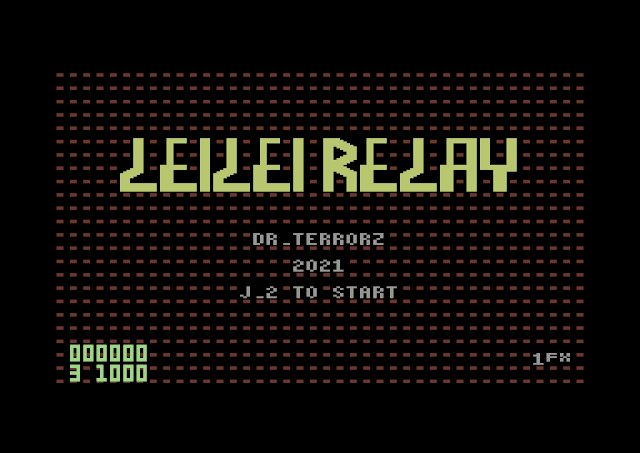
I've been strangely worried about being less "productive" when it comes to things like PETSCII or bitmap graphics. But all in all I did quite a lot of other things. For example, I released the C64 game Leilei Relay, even if this was mostly coded in 2020. 

Goodbye 2021

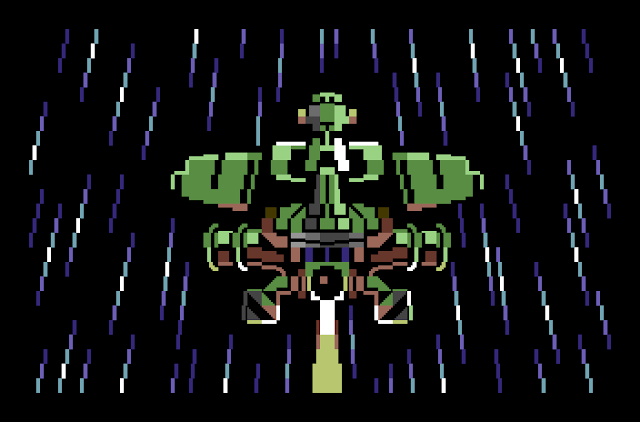
The working title was Uranus Lander (cf. Jupiter Lander), and I really did intend to make a PETSCII one-screener out of it. 

Then I got into vertical scrolling, character graphics, smooth sprite animation... This way the project grew in size.

Hyperspace PETSCII

Although I have worked on a new Multipaint version from time to time, there is no hurry and for once the program seems to work across platforms without too many bugs, so why not have a little vacation. Well, no, I did work on it but the internal overhaul is so large that it's not going to be seen out soon.

With re_monument, I did go public with the first "demo-something" intended for more modern computers. This was outed at the Vammala Party. The code was originally p5.js browser-friendly, but eventually put into Processing/Java to get the music working more easily. The music was put together with my weird MIDI-setup and the software I may eventually open up more.

Frame from re_monument

Also, I put a lot of attention on Amiga and Raspberry Pi at the first half of 2021, but stopped working on that. I'll see if I can pick up some of the things next year.

Electric kickbikes (or "scooters") became a new blog theme, first starting with the Voi rentals and eventually getting my own. It's one idea for steering my mind away from sitting in front of a computer both at work and at home. Sadly the weather's not currently very good for riding.

Games

It looks I got to play a lot of games though.

2020 was the year of Steam/Proton, but this year I've also added Geforce Now streaming service to my arsenal. With some luck, it's possible to collect games to Steam and Epic and stream them using this service, without having to use your own hard disk space for installing.

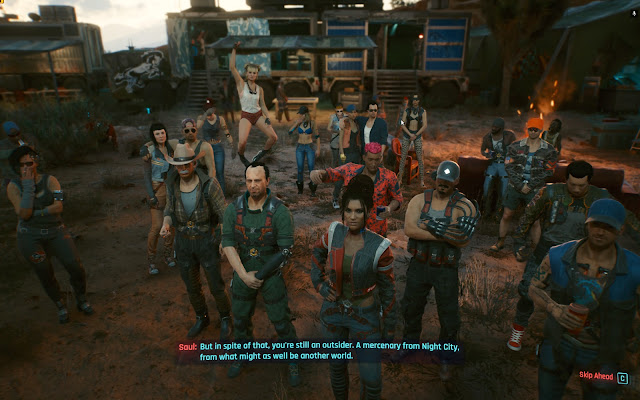
Recently I played through last year's Cyberpunk 2077. Despite all the bloated early hype, it's a decent fairly linear story-driven game. Many in-game technologies that looked like dynamic gameplay elements in the trailers are more like skin. Granted, it might reward more in-depth play and optimizing the character's cyber implants.

Having said that, the hacking elements are rather nicely done and do not distract too much from the other gameplay. Still, it looked the fastest way to play through was to emphasize gun skills and damage hacks, then shoot everything to pieces.

Spot the glitch.

Plague Tale: Innocence was on the table too, but had to give up halfway because of stressful gameplay. Likewise Shadow of the Tomb Raider was eventually (digitally) shelved. These games are not duds but simply did not click with me now. Reventure took a surprising 16-hour chunk to play "through".

I also got round to playing Fortnite, only to find it's not that inspiring to sneak around for 20 minutes and then end up killed by the first person you meet. Somehow surviv.io had already shown a better format to me. I can still understand the appeal of the game. 

Talking of surviv.io, I might have continued playing, but the numerous problems with logging in, and apparent disregard for the browser version began to demotivate me. Not that many play it currently, it seems.

Proton has continued to be useful. I had quite an educational streak of fps games with the remastered QuakeBlack Mesa (Half-Life 1 remake), Halo: Master Chief Collection, and replaying Half-Life 2 once again.

Chess is still on the playlist, but the lessened playtime begins to show in the ratings. It may also be the average opponent at Lichess has become better, what with the surge in popularity of chess in general. But in any case, a vicious circle of not playing may be complete as it's not fun to see the rating drop. Yet, if the only remaining motive to play is the rating, then it may be worth reconsidering whether to continue playing at all. I'll still give it a chance when a suitable moment comes.


Sci-fi, films, TV, books

Instead of a full season there was a Doctor Who 6-parter called Flux. On one hand it was a bold experiment with disjointed story-telling, but on other hand it also suffered from the format, cramming in ideas that would have been more suitable for a full season arc. 

The show has been best when the stories have been more muted and given some time to build-up, so of course everything had to be extremely amped-up, spliced and shifting gears rapidly.

One of the Ravagers. Like, Ravages of Time. Geddit? Sigh.

Sure, Doctor saves the Earth and the Universe routinely in the season finales, an in-joke at this point, but now everything was hoovered back to the good old status quo in the most rapid and CGI-laden way possible. Plus a couple of genocides here and there.

Ok, it was actually unclear what's the state of the universe(s) now. We'll see. There's a couple of specials to come, but rumours also abound of cancelling or switching ownership of the whole series.

Sisyphus: The Myth, was initially promising but a very un-even time travel scifi show. Lost in Space ended in a decent way, but it never quite captured the concept of the original, of, you know, actually being "lost in space". Except maybe as the final punchline of the final episode. The not so great Another Life also ended, improving somewhat from the first season.

Lucifer has not that much to do with Neil Gaiman's world from which it originates, but it has been a fun and competently done series. Likewise Dirk Gently's Holistic Detective Agency americanized the original concept a lot but was still nice while it lasted.

The 1990s mapped: as internet became widespread, Gibson had to follow

As for books, the most important was Liu Cixin and the trilogy of The Three-Body Problem, The Dark Forest and Death's End. (Curiously, the Finnish version of Death's End would be "Death is Eternal") It's a somewhat "post-modern" take on classic science fiction, and despite being "non-western" it's very aware of Clarke, Asimov and the like. Although working in this classical hard science fiction frame, it is comparatively pessimistic and to extent even nihilistic.

I read William Gibson's sprawl trilogy in very early 1990s, but have not really paid much attention to his later works. Now I've been going through the 1990s "bridge trilogy" of Virtual Light, Idoru and All Tomorrow's Parties.

Wednesday, 1 December 2021

Zeeclo Fenix inside


As it gets somewhat trickier to drive this in the sub-zero temperatures and icy paths, it is perhaps the moment to take the Zeeclo Fenix to the garage. 

What is inside the box?


The scoot has been folded and placed upside down on top of two chairs, so the folded stem fits between them.

The bottom panel was easy to remove, there are 14 hex/Allen screws.

The inside is a curved-corner container with the battery pack, controller boxes and a huge spaghetti of cables.

Not shown is the inside of the removed panel, which also holds two more of those foam rubber bricks. It is yet unclear if there is something else than glued foam rubber holding those elements in place, because otherwise everything is simply lying on that bottom panel.

The front end after the cables is empty space, no more boxes there.

Among the spaghetti there's the grey cable loop that I understand is the speed limiter, forcing the 25km/h maximum speed. In Finland, this makes the electronic kickbike equal to a bicycle in the eyes of the law.

I've read some differing information about the true maximum speed, which might be 35 or 40km/h.


The battery pack

The battery pack certainly takes the most space. While it looks that a slightly larger pack would fit inside, I'm not sure if it would be worth the trouble. The vehicle is heavy as it is.


The amount of typos here do not really build my confidence about the quality assurances and certifications, but this alone isn't a reason to think the battery would be fake.

The ~20x10x7cm blue box contains the battery pack with this information:

Li-ion Power Battery Pack
Model: CHY3713E041090
Nominal voltage: 37VDC
Charging Voltage: 42V DC
Rated capacity: 13Ah/481Wh
Cell:18650 [=18x65mm type]
ISO9001/Authentication enterprise [=quality management standard]
Manufacturer: DongGuan CHY BATTERY TECHNOLOGY CO.,LTD
IEC62133 [=certification]
UN38.3 MSDS [=certification]

Googling the "model" or a fragment of that code did not give meaningful results. Should I need a replacement, it might be not as simple to find as I thought. The DongGuan site did not have the exact model either.

18650 means the pack uses the 18x65mm cells, commonly used in electric bike and car battery packs. A 6x11 matrix of these could theoretically fit into this pack, but after peering through with a small flashlight it looks there are 5x10 cells.

Some high-level math suggests that 10 x 3.6V cells need to be in series to get at 36V. I'm thinking each odd column is upside-down in relation to each even column, as I've seen photos of comparable products do that. But this is something I couldn't see directly.

I didn't take the battery pack out now, but it shouldn't be hard to guesstimate how much the ~20x10x7cm pack could weigh:

There's a website that talks of fake 18650 batteries: https://www.instructables.com/How-to-know-a-fake-18650-battery/

They claim that a fake 18650 battery weighs less than 42g, as little as 32g. Real cels weigh 45 or even 50 grams.

So, 

50 * 32 =1,6kg ("fake")
50 * 42 =2,1kg ("fake")
50 * 45 =2,25kg
50 * 50 =2,5kg

If the battery pack weighs less than 2kg total there might be reason to worry, but even if it weighed more it's no guarantee of best possible quality.

This also shows that the battery makes for less than 10% of the scoot's weight (27kg).
 

The controllers

There are two controller boxes on top of each other, and I'm now just assuming they are similar, possibly because there are two motors. At least they have the same cables coming out of them. However it looks it says "dual motor" on one, so why wasn't one enough?


Although the brakes are physical disc brakes, the levers need to override the motors, so the levers also work as a kind of clutch. This is likely the reason why the controller needs to address brakes too.

I had to tear away some of the foam rubber to see the full text, typos and all:

DC Brushless motor Contoller
Voltage: 36V
Current: 21A
Brakes: Low level
Speet set1. 1-3. 7VDUAL MOTOR
TF-S866-ABS-ELECTRON
YKJY06F0C01-A-H-T4

Again the codes were not that useful for finding an exact make, but the "S866" at least is a clue this plays together with the S866 display. Looking at webstores the S866 is often sold with a similar-looking controller box.

The code might actually be YKYJ06F0C01 and not "YKJY..." but that doesn't give many results either.

There are so many typos in the texts I'm unsure if the information is correct in the first place.


The indicator lights

While at it, I looked at the deck sides and pulled out one of the indicator light plastic housings. 


This was again simple to do and revealed it should be easy to remove these decorative elements.


Now if the deck and all these were removed I'd get a nice-looking black box, but I'd also have to take care of all the openings so that water and dirt don't get in. There's some black gunk that both keeps the wires in place and prevents water from getting in.

The wooden deck

I also took the opportunity to check the wooden deck and how it might be removed. 

I was afraid the deck might just be brutally glued in, but this isn't the case. Feeling around the "sandpaper" with my fingers, I discovered spots where it gave in, just a little, indicating there are bolts underneath.


The surface is probably skateboard grip tape. Pulling one corner out, the bolt could be seen, but I didn't pull it out more as this ruins the look of the surface. Perhaps after I get a replacement grip tape I can experiment more.

The deck looks like some bamboo variety, this might weigh 500 grams or even less, not very significant. The plastic decorative parts also weigh almost next to nothing.

Removing the wooden part could make the deck 8mm lower. But I'll still have to see if the wooden piece is there for a good reason or not.

Friday, 12 November 2021

Halo Master Chief Collection

Halo is 20 years!

I played through the Halo: Master Chief Collection campaigns on Linux through Steam/Proton. Here are some of my experiences.

I'll say at first that at one point the MCC received a major update, and as a consequence I lost my saves. 

This means I was mid-way Halo 3: ODST and had to start it again. I'm not sure if this can be attributed to Proton, but I could not see anyone else complaining. Perhaps the lesson is, if you are mid-game, it might be wiser not to allow the MCC to update.

(21.11.2021 Edit: This actually happened again, fortunately I'd played them all through.)

I played the original Halo without knowing you can use TAB key to instantly switch between old and new graphics. Perhaps this was for the better, because doing it all the time is bound to highlight problems in a very detailed scale. As someone who is not a rabid original Halo fan, I could therefore enjoy the remaster in its totality. I've thought MCC has been a pretty good deal and do not mind that much whether the "remastering" has gone a little out of hand or not.

Most of the games worked very well, and I'll mention some basic Proton (5.0-10) experiences. The setup is GeForce GTX 1060 3GB, driver version 460.91.03. Processor is i5-4670 CPU @ 3.40GHz, 16 GiB memory and I'm running Linux Mint 19.3 Tricia 64-bit. Display resolution is 1920 x 1200.

I played these games with keyboard and mouse, but as Halo is originally a console series they should be playable with a gamepad.


Halo: Reach

I'd recommend not playing this first because you'll be spoiled. No, it doesn't reveal plot points, but it's just that good. Afterwards, playing Halo 1 and 2 may even feel like a painful experience. 

The Reach campaign is a thoroughly modern fps, with a lot of variety, clear signposting and constant narrative.

Harassing some locals

The story starts in a small way at a distant human colony of Reach, where (I think) a Hungarian agrarian settlement is suspected of disturbances. A group of elite soldiers called the Noble Six is sent to investigate. Then things start to escalate.

It does make me wonder why this Noble Six is tasked with curbing a supposed pig-sty rebellion instead of sending some mall cops, but it makes for a cool and atmospheric start. One even wishes things could have continued in this vein for somewhat longer, but there's shooting to be done.

Driving and piloting different vehicles adds spice to the game

Strangely enough, Star Wars:Rogue One (which came later) shares some plot elements with this game, and the prequel's relation to the original is also somewhat similar.

Proton verdict: Seemed to work smoothly throughout.


Halo: Combat Evolved (Anniversary Edition)

A super-soldier called the Master Chief is awoken from a deep sleep like any old frozen asset. The ship is soon breached by the alien race of the Covenant. All goes hairy, Master Chief secures the all-important ship AI Cortana, crash lands with a bunch of marines on a huge ring-world like structure and very soon the Covenant follows.

One of the few times in the series you get to be on a halo and actually see it

The forces begin to move along the Halo ring, discovering ancient structures and weird formations of nature.

To me the landing on Halo and the subsequent activity has an almost legendary status. An early example of a genuinely working outdoor environment coupled with AI that makes the game experience fun and rich rather than pedantic.

The new graphics (right) aren't always a huge improvement. The blue water looks sillier.

I'm not especially invested in the story of the Flood and the Flood enemies. It's like the game suddenly forgets the Ringworld influences and goes full-on into Aliens and Predators fare, which then mostly takes place indoors in very repetitive corridors.

As I said previously, hitting TAB will instantly switch between the new and old graphics. And I do mean instantly. Because the game physics in any case work with the original Halo meshes, in the new graphics you can sometimes see bullets hitting a tree even if they quite shouldn't!

This plays well with Proton.


Halo 2 (Anniversary Edition)

I'm not sure what happened. Of course in massive hindsight it's quite easy to say what are the good and less good parts of Halo 1. But at least during making the sequel it looks nobody thought to tone down the less interesting elements. 

Earth looks great, sadly there's not much of it.

So Halo 2 re-hashes the same ingredients from the first game, there's shooting-a-plenty of those boring aliens endlessly with their nerf guns. 

Ok, so the repetitiveness is not quite as heavy here, but it is still part of the recipe. Add to that I wouldn't compare the combat set pieces to the ones at the beginning of Halo 1. Yes, they look similar but it doesn't quite play that way.

There are some visual bugs in that the "brutes" in the videos and in actual game play look so different I was at times wondering what the hell is happening. There's also an occasional mismatch between where the cut-scenes leave off and the ensuing game situation.

Here we are again on a halo, driving another Warthog

You also get to play both the Master Chief and the Arbiter. It's a novel idea, but it doesn't add that much and I'd have preferred the game was from the Master Chief POV entirely after all. Years ago, playing the first time around I quit soon after this switcheroo.

On Proton front, this game also had the most hiccups. This could be more to do with loading and memory handling than direct GPU load, as the graphics shouldn't be too complex.

Interestingly, this choppiness occurred whenever a large and complex vista opened up, even if just turning left or right. After "eating in" the landscape, the choppiness would disappear. Reducing detail did not help that much.

Halo 3

The story continues directly from where the previous part ended. Having more fights set on Earth is a good thing because it makes the environments already more relatable. Predictably, we soon get to the other side of the universe but fortunately that part isn't overly long.

Nice foliage

I'm sorry to repeat how my benchmark for "great Halo experience" are the beginning parts of first Halo. But in this measurement Halo 3 does not offer as many comparable thrills. I still think it does the generic fps action nicely and the surroundings have variety. The change of pace is orchestrated well. 

Fighting the large Scarab spider-mechs is both somewhat frustrating but also very exciting, a set-piece in itself. The Flood continues to be as boring as ever.

It takes more than blasting at weak spots to kill a Scarab

Instead of video clips the cut-scenes are made with the engine graphics. To my current eyes this seems the better choice, but some of the characters look silly considering they are supposed to be the same as in Halo 2.

At this point game storytelling had advanced strides, but had still some ways to go. For some reason the characters end up caring about each other a lot, despite not spending much time together. There's a grand sci-fi setting and a nice, if obligatory, "reveal".

I enjoyed this more than Halo 2, and it also runs smoother through Proton. Perhaps it had tiny hiccups here and there. 


Halo 3: ODST

Not very promisingly the game starts with the most immature super-soldiers I've seen for a long time. There's also "Coming in hot! We are going to crash! Aarrgh...!" type of plotting so familiar from the other games.

This time the hero isn't the Master Chief, but a bunch of military types called the ODST. The story takes place during the alien invasion of New Mombasa in Halo 3.

...

The play begins from a seemingly open-ended city that is soon revealed to be quite closed after all. Yet it's quite maze-like and you need to learn to use the visor to navigate around. The waypoint creation system is something I would have thought as cool around 1994, but luckily it is only really needed in these "framing story" portions.

But now I'm making ODST sound like it's a crap game, which it is not. On the contrary, along Halo:Reach it might be the most fun Halo game I've played.

The image intensifier is almost necessary so this view gets a lot of use.

The framing story has the player moving about the nightly streets of New Mombasa. The story becomes interspersed with flashback vignettes about what happened to the other teammates, as "evidence" of their actions are found from the street.

This story device then allows the game to switch between different times and combat situations without having to bridge them directly. The threads eventually converge to the climax that happens in the present. The player as a silent "Rookie" merely observes the story that happens to the other soldiers.

A Warthog sequence with a twist.

What with the Noble Six and the ODST crew it appears there's quite a lot of these super-hero characters around, and all seem just as bad-ass as the Master Chief. I guess the player couldn't be made to suffer to play a Halo game with less effective heroes.

This game worked fine through Proton and despite having to play the first half twice I enjoyed it a lot.


Halo 4

Halo 4 looks like a stylistic leap compared to all the other games. It was released in 2012. To give perspective, this is not far from the new Tomb Raider of 2013. The fourth part was made by 343 Industries and not Bungie, the original developers of Halo.

Master Chief wakes up again.

I felt at first this might have the potential to be the best Halo yet. But then... what can I say. Well, I've been thinking Halo games are maybe a little too similar, but when they come up with something new I'm not quite happy either.

I'd think it's fair to assume that in an fps it's usually more satisfying to fight something that's at least remotely humanoid. And not some totally unrelatable, annoying flying mechanic-metaphysical fucks that take million shots from these wonky new guns.

A weird new world and weird new guns...

Things get better though. It's just that the superiority of these new hostiles has to be first underlined by having them really resilient, which isn't that fun.

The story attempts to put more focus on the few characters, including a distinct enemy leader persona. Although the storytelling might be now more competent, this emphasis is somewhat hit-and-miss.

...and some mandatory Warthog driving.

The quality of visuals is uneven. As I said the beginning looks surprisingly next-gen. There are more environment effects, and the Covenant aliens look far more detailed. But then there are sections that are not so far developed and would not have looked out of place in Halo 3.

Again, Proton did not have any major problem with this campaign and it was very playable.


On the whole

So, that's it, more Halo than a person can bear, and I'd say the campaigns are a good deal if it can be found in the 20-30€ range or less. In this I don't include the multiplayer, which due to Easy Anti-Cheat probably won't work in Linux/Proton without tinkering.

The achievements didn't work, not sure if that has something to do with my settings or not.

The games look good, obviously much better in motion than in these static and somewhat random screenshots.

There's loads of stuff that probably only relates to multiplayer

I'd perhaps nominate Halo:Reach as the best here, partly because it's so clear, concise and sweet, partly because it doesn't have the Flood and the Master Chief/Cortana interactions that tend to get somewhat boring in the long run.

Without thinking too much, from best to worst:

Halo: Reach
Halo: ODST
Halo 1
Halo 4
Halo 3
Halo 2